

Germany’s new leadership came to power promising a dramatic turnaround for Europe’s largest economy after two consecutive years of contraction. Chancellor Friedrich Merz pledged an unprecedented wave of public spending to jump-start growth, and early signals suggest that confidence is beginning to return. Yet economists and business leaders caution that without deeper structural reforms, the recovery could remain fragile.
At the heart of the current debate is a central tension captured in the phrase Germany’s spending push fuels optimism about growth, even as reforms fall behind. While fiscal stimulus is lifting expectations, progress on long-delayed reforms has been slow, raising doubts about how durable the rebound will be.
Growth Prospects Brighten, But Caution Remains
Germany’s economic performance matters far beyond its borders. Accounting for roughly a quarter of the euro zone’s total output, the country’s recovery is crucial to the region’s broader revival. After expanding by just 0.2% in 2025, growth is forecast to strengthen this year as government spending accelerates.
The International Monetary Fund projects an expansion of 1.1% in 2026, while the German government initially anticipated growth of 1.3%, though officials now expect a more modest figure closer to 1.0%. Banking leaders share this guarded optimism. Ulrich Reuter, head of Germany’s savings banks association, described the upswing as encouraging but warned that the recovery remains vulnerable.
Investor sentiment reflects this mood. In January, confidence reached its highest level since mid-2021, suggesting that markets believe the worst may be over. Economists at DIW Berlin echoed this view, noting that if current fiscal measures take full effect, a more noticeable pickup could follow.
Slow Decisions Weigh on Reform Momentum
Despite the positive signals, Germany’s political machinery continues to move cautiously. Last March, parliament approved a landmark €500 billion infrastructure fund, yet only a small portion of that money had been spent by year’s end. The pace of implementation has frustrated businesses and voters alike, especially as Merz approaches his first year in office.
Coalition politics have further complicated the reform agenda. While the chancellor favors a pro-business approach, his Social Democrat partners worry that some proposals could weaken worker protections. Disputes over pensions, taxes and labor rules have slowed progress, and the most sensitive reforms have been deferred to expert commissions due to report in late 2026.
Economists argue that Germany’s challenges run deeper than cyclical weakness. Carsten Brzeski of ING said the economy needs a “complete makeover,” pointing to excessive bureaucracy, outdated digital infrastructure and mounting demographic pressures. Without tackling these issues, he warned, fiscal stimulus alone may not be enough.
Industry Shows Signs of Stabilisation
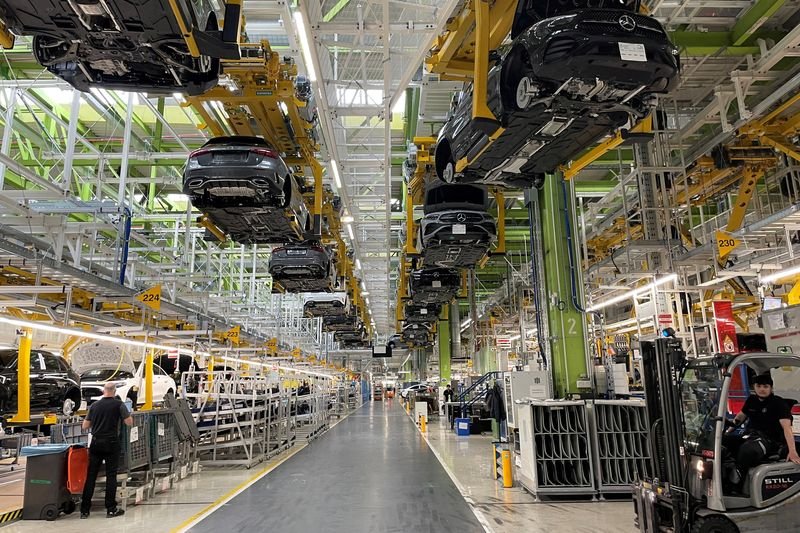
On the ground, some sectors are beginning to recover. Industrial production rose for a third straight month in November, while factory orders jumped sharply. Business surveys suggest private sector activity is improving, and analysts at Capital Economics now believe Germany could finally return to steady growth after years of stagnation.
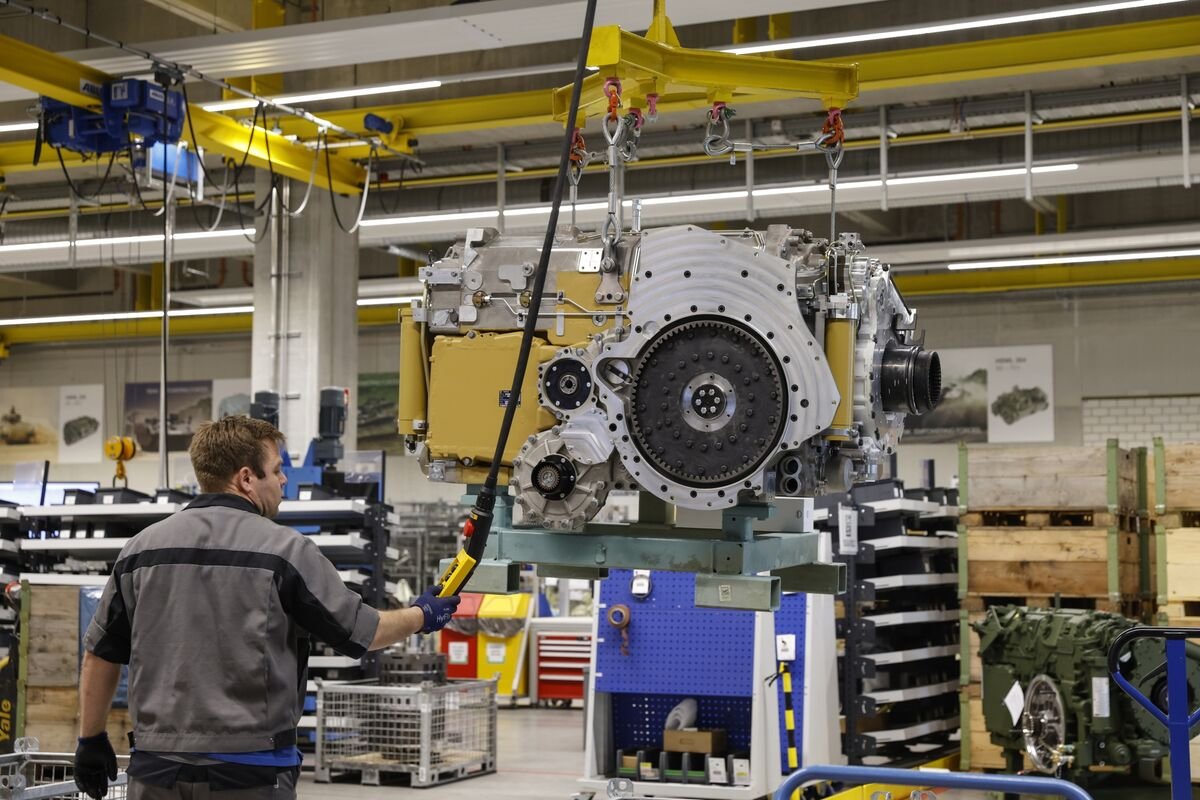
Still, industry groups remain cautious. Capacity utilisation is well below historical averages, meaning factories are running far from full potential. The BDI industry association warned that underused machinery, postponed investments and job losses continue to weigh on output.
Adding to concerns, parts of the infrastructure fund have been diverted toward day-to-day spending rather than long-term growth projects, dampening the initial enthusiasm that greeted the fiscal shift.
Households and Companies Still Under Pressure
Beyond industry, domestic demand remains weak. Consumer confidence fell again in January as households increased savings to levels last seen during the global financial crisis. Rising unemployment and lingering uncertainty suggest that spending will remain subdued for much of the year.
Corporate distress is also mounting. Bankruptcies and insolvency-related closures are at their highest level in more than a decade, underscoring the strain many firms continue to face after years of sluggish growth.
The Road Ahead: Optimism Meets Urgency
Germany stands at a pivotal moment. The spending surge has clearly lifted expectations, validating the idea that Germany’s spending push fuels optimism about growth, even as reforms fall behind. Yet optimism alone will not secure a lasting recovery.
Business leaders stress that long-delayed reforms must now move from commissions to concrete action. Cutting red tape, modernising digital services, and stabilising pension and health systems are seen as essential steps to restore competitiveness.
As DIHK analyst Volker Treier put it, the task now falls squarely on Chancellor Merz and his government to turn tentative momentum into sustainable growth. Without decisive reform, today’s rebound risks becoming yet another missed opportunity in Germany’s long struggle to regain economic dynamism.

