

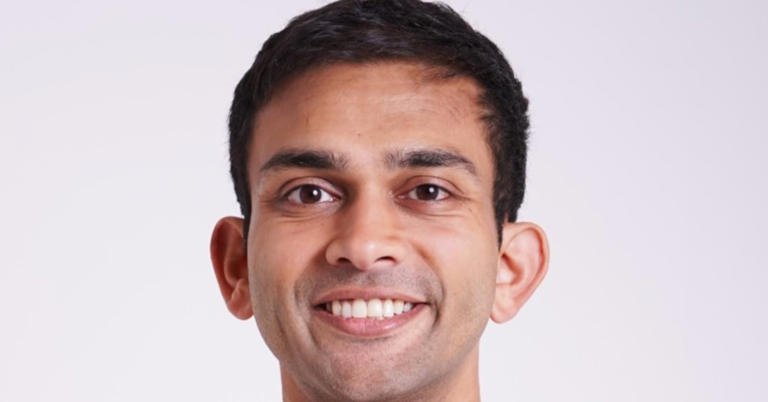
Dhruv Amin and Marcus Lowe seemed to be living every founder’s dream. After leaving Google, the two entrepreneurs launched a startup that was profitable from day one. By September 2023, the company was generating revenue at a $2.2 million annual run rate, and the future looked even brighter. Amin recalls confidently projecting that monthly revenue would grow at least five times by the end of 2024.
Then everything changed.
Instead of scaling a healthy business, Amin and Lowe made a decision that shocked employees, customers, and even their own investors: they shut the company down completely and started over. The reason, Amin says, was simple but unsettling—ChatGPT.
A Profitable Business Meets a Technological Shock
At the time, their startup—then called Create—operated as a marketplace that connected startups with freelance engineers, supported by AI-powered tools to build apps and websites. It was working. Clients were happy. Revenue was climbing.
But when OpenAI released ChatGPT in November 2022, Amin says the leap in generative AI capabilities caught everyone off guard. Compared to earlier tools, this new technology hinted at a future where machines could write complex code at a level approaching human developers.
By spring 2023, Amin and Lowe began asking an uncomfortable question: what happens to a developer marketplace if AI can eventually do most of the coding itself?
The Risk of Doing Nothing—or Everything
The founders realized they were facing two equally frightening possibilities. If AI advanced quickly, their existing business could become irrelevant. But if they rebuilt the company around AI and the technology failed to mature fast enough, customers could leave—and the company could run out of money.
For months, they debated, revisiting the decision again and again. “It took us a very long time to agree,” Amin says. Some days, one founder felt optimistic about the original marketplace. Other days, the other founder felt the pull of building something entirely new.
What finally tipped the scales was experimentation. They quietly launched early AI-based prototypes that allowed users to generate code without speaking to a developer at all. Customer feedback was encouraging. For the first time, it felt like the AI approach had real product-market fit.
Back to Zero
In October 2023, Amin and Lowe made the call. They laid off half of their seven-person team, shut down the developer marketplace, and cut ties with freelance engineers. Within weeks, the office was empty.
It was a brutal reset—especially after raising $3 million in venture capital and committing to clear growth timelines. Going back to investors and saying, “We’re starting from zero,” wasn’t easy. Many questioned whether AI would truly deliver on its promise.
“At the time, people were still skeptical,” Amin recalls. “They’d ask, ‘Is this AI thing actually real?’”
Rebuilding Around AI
The rebuild began with small steps. The team first released an AI tool capable of generating app components like login systems and calendars. Then, in April 2025, they took a much bigger leap: a platform that could help users build entire online businesses—from authentication to payments—without any coding experience.
That launch came with a new name: Anything.
The response was immediate. Within two weeks of the relaunch announcement, Anything hit a $2 million annualized revenue run rate, according to Amin. What once felt like a reckless gamble suddenly looked like a perfectly timed bet.
From Near Failure to a $100M Valuation
Today, Amin and Lowe—both 33—are co-founders and co-CEOs of Anything, an AI “vibe-coding” startup valued at $100 million following an $11 million funding round completed in September. The journey hasn’t been smooth, but it’s been defining.
The AI coding space, Amin admits, is still extremely early. Reviews of vibe-coding tools are mixed, and large language models went through periods of slower progress in 2024. There were moments when he wondered if the pivot had been a mistake.
Still, real users are already building real products. Non-technical founders have launched commercial apps using Anything, including a hair salon owner’s AI stylist app and a dental hygienist’s tool for tracking gum health.
Why They Didn’t Take the “Easy” Pivot
Along the way, Amin and Lowe had chances to chase faster, safer wins—design tools, prototyping software, agency-focused products. They deliberately passed.
The reason, Amin says, was their mission. From the beginning, they believed people should be able to build real, production-grade products even if they don’t know how to code. Anything less would have meant abandoning that vision.
Looking back, Amin sees the painful pivot as part of the company’s DNA. “Now we can say we didn’t just talk about commitment—we lived it,” he says. “Blood, sweat, and tears.”
Looking Ahead
Amin initially thought it would take about a year for AI to become capable enough to power real production systems. In reality, it’s taken closer to two—and he still believes the industry is just getting started. The sophistication of what users will be able to build with Anything over the next year or two, he says, will be dramatically different.
As for the old marketplace? Amin isn’t sure it would still exist today, or whether investors would still find it compelling in a world increasingly centered on AI-first companies.
For now, the founders believe the hardest pivots are behind them. The focus has shifted to execution, growth, and making the most of the opportunity in front of them—proof that sometimes the most dangerous decision is not changing at all.

