

Federal Reserve Hikes Rates: Fed Raises Interest Rate to 3.75%-4% Under Kevin Warsh

by worlddaily
Federal Reserve hikes rates

Federal Reserve Hikes Rates: Fed Raises Interest Rate to 3.75%-4% Under Kevin Warsh

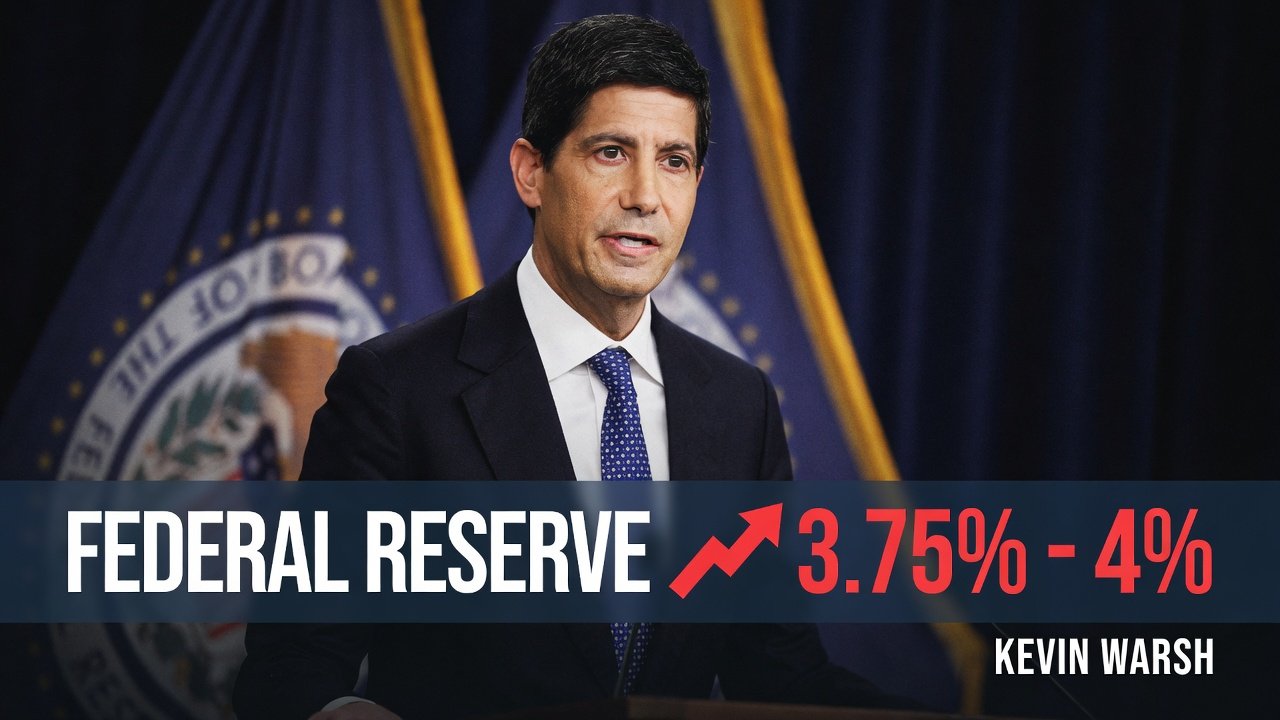
The Federal Reserve hikes rates decision has put U.S. monetary policy back in tightening territory, with the central bank raising its benchmark interest rate by 25 basis points to a target range of 3.75% to 4%. The decision was approved unanimously by the Federal Open Market Committee during its September 15-16, 2026 meeting.

The increase marks the first U.S. rate hike in three years and the first such move under newly appointed Federal Reserve Chair Kevin Warsh. The Fed said inflation remains elevated and that the latest action is intended to support a more timely return toward its 2% inflation objective.

The decision also comes amid public pressure from President Donald Trump, who has argued that U.S. interest rates should be substantially lower.

Federal Reserve Raises Rates by 25 Basis Points

The Federal Open Market Committee voted 12-0 to raise the federal funds target range by one-quarter percentage point. The new range is 3.75%-4%, effective September 17.

The Fed’s decision represents a shift from the previous period of rate stability.

The central bank cited several factors behind its decision, including continued economic expansion, resilient domestic spending, strong productivity growth and robust capital investment. At the same time, policymakers noted that inflation remains elevated.

The rate increase is intended to keep monetary policy sufficiently restrictive to help bring inflation closer to the Fed’s 2% target.

Kevin Warsh Leads His First Rate Hike

The September decision was the first rate increase under Fed Chair Kevin Warsh, who took over leadership of the central bank earlier in 2026.

Warsh had previously signaled concerns about maintaining price stability while also assessing economic growth and employment conditions.

According to Reuters, Warsh cited accelerating economic and job growth as factors supporting the decision, while the central bank remains concerned that inflation is proving more persistent than previously expected.

The decision also puts greater focus on how Warsh will guide monetary policy during the remainder of 2026 and into 2027.

Why Did the Fed Raise Interest Rates?

The primary reason given by the Federal Reserve is persistent inflation.

The central bank’s latest statement said inflation remains elevated and that the rate increase should support a more timely return to its 2% inflation objective.

Several factors are contributing to inflationary pressure.

Global energy prices have risen sharply amid geopolitical developments, while tariffs and strong capital investment have also been cited as factors affecting the economic outlook. Reuters reported that the Fed is particularly concerned about inflation remaining elevated for longer than previously anticipated.

By increasing borrowing costs, the Fed can attempt to reduce demand across the economy and limit persistent price pressures.


Trump Has Called for Much Lower Interest Rates

The Fed’s decision comes against a backdrop of political pressure from President Donald Trump.

Trump has repeatedly argued that U.S. interest rates should be significantly lower. Following the September decision, he said rates should be 1% or lower, arguing that the United States should benefit from its strong credit position.

The rate hike therefore represents a clear difference between the administration’s preference for lower borrowing costs and the Fed’s current focus on inflation.

The Federal Reserve operates independently in setting monetary policy, and the September decision was approved unanimously by the FOMC.

Inflation Remains a Major Challenge

Inflation has become more complicated for policymakers because price pressures are being influenced by several different forces.

Energy costs have increased amid geopolitical tensions, while tariffs can raise the cost of imported goods. At the same time, strong economic activity can keep demand elevated.

The Fed’s latest projections indicate that policymakers expect inflation to take longer to return to the central bank’s 2% objective. Reuters reported that the updated projections point to inflation remaining above target for longer than previously anticipated.

This helps explain why policymakers chose to raise rates even as higher borrowing costs can create challenges for households and businesses.

What Higher Interest Rates Mean for Americans

A higher federal funds rate can affect a wide range of borrowing costs across the U.S. economy.

Mortgage rates, credit-card borrowing costs, auto loans and business financing can all be influenced by changes in broader interest-rate conditions.

When borrowing becomes more expensive, consumers may reduce spending on large purchases, while businesses may reconsider investments that depend heavily on financing.

At the same time, savers can potentially benefit from higher interest rates on certain savings products and fixed-income investments.

The overall objective of tighter monetary policy is to moderate demand sufficiently to reduce inflationary pressure.

Impact on Businesses and Investment

Businesses also face higher financing costs when interest rates rise.

Companies considering expansion, acquisitions, construction projects or other capital-intensive investments may reassess those plans when borrowing becomes more expensive.

However, the impact varies considerably between companies.

Businesses with strong cash positions may be less affected by higher borrowing costs, while highly leveraged companies can face greater pressure.

The Federal Reserve noted that capital investment remains robust, suggesting that higher rates have not eliminated investment activity across the economy.

Financial Markets React to the Fed Decision

Financial markets closely monitor Federal Reserve decisions because interest rates influence asset valuations, borrowing costs and expectations for economic growth.

Following the September rate hike, Reuters reported that the dollar strengthened while short-term Treasury yields moved higher. Equity markets also came under pressure as investors assessed the possibility of additional rate increases.

Investors are now focused not only on the September increase but also on what the Fed may do during upcoming meetings.

The Federal Reserve’s next scheduled FOMC meeting is October 27-28, 2026.

Fed Signals More Tightening Could Follow

The September decision may not be the final rate increase of the current cycle.

Updated Fed projections indicate that most policymakers expect at least one additional rate increase during 2026. Reuters also reported that the central bank’s communication pointed toward the possibility of further tightening if inflation remains persistent.

That possibility has already influenced financial-market expectations.

Goldman Sachs, for example, subsequently revised its outlook and projected another Fed hike in October following the central bank’s more hawkish signals. This is an external market forecast, not a commitment by the Federal Reserve.

Why the Decision Matters for the Global Economy

Federal Reserve policy extends beyond the United States.

Changes in U.S. interest rates can influence the dollar, global bond yields, capital flows and emerging-market currencies.

When U.S. rates rise, dollar-denominated assets can become relatively more attractive to international investors. This can affect capital flows into emerging markets and put pressure on local currencies.

For countries such as India, higher U.S. rates can therefore influence foreign investment, currency markets and domestic financial conditions.

Global investors will be watching the Fed’s next steps closely, particularly as geopolitical tensions and energy prices remain important sources of uncertainty.

The Fed’s Economic Outlook

Despite the rate increase, the Federal Reserve’s latest statement did not describe the U.S. economy as weak.

Instead, policymakers said economic activity is expanding at a solid pace. Domestic spending remains resilient, productivity growth is strong and capital investment is robust. Job gains have also kept pace with the workforce, while unemployment has changed little.

This combination creates a complicated policy environment.

The Fed must balance price stability against employment and economic growth. Raising rates can help contain inflation but can also slow economic activity if financial conditions become too restrictive.

What Comes Next for Interest Rates?

The next phase of U.S. monetary policy will depend heavily on incoming economic data.

Inflation readings, employment figures, consumer spending, energy prices and broader financial conditions will all be important.

The Fed has not committed to a fixed path for future interest rates. Instead, policymakers will continue assessing economic conditions as new information becomes available.

For markets, this means every major inflation and employment report could influence expectations for the next FOMC decision.

Looking Ahead

The Federal Reserve hikes rates decision marks an important change in U.S. monetary policy. The central bank unanimously raised its benchmark rate by 25 basis points to 3.75%-4%, citing persistent inflation and the need to support a more timely return toward its 2% target.

The move is also significant because it is the first rate increase under Kevin Warsh and comes amid public pressure from President Donald Trump for substantially lower borrowing costs. Trump has publicly called for rates of 1% or lower, while the Fed has maintained that its monetary-policy decisions are focused on its statutory economic objectives.

With policymakers signaling the possibility of another increase, markets and businesses will now be watching inflation, employment and economic-growth data closely. The October FOMC meeting will provide another important opportunity to assess the direction of U.S. monetary policy.

FAQs

1. Did the Federal Reserve raise interest rates in September 2026?
Yes. The Federal Reserve raised the federal funds target range by 25 basis points to 3.75%-4% at its September 15-16, 2026 meeting.

2. Why did the Fed raise interest rates?
The Fed said inflation remains elevated and that the rate increase is intended to support a more timely return to its 2% inflation target.

3. Who is the current Federal Reserve Chair?
Kevin Warsh is the Federal Reserve Chair in September 2026. The September rate hike was his first as chair.

4. Did Donald Trump oppose the Fed’s rate hike?
Trump has publicly argued for substantially lower U.S. interest rates. After the September decision, he said rates should be 1% or lower.

5. Was the September Fed rate decision unanimous?
Yes. The FOMC approved the September rate increase by a 12-0 vote.

6. Could the Federal Reserve raise rates again in 2026?
The Fed’s updated projections indicate that most policymakers expect at least one additional rate increase in 2026, although future decisions will depend on economic conditions and incoming data.

You may also like