


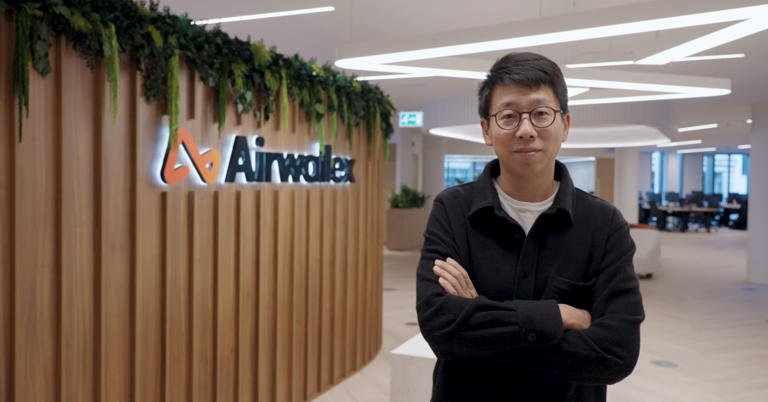
The word burnout doesn’t exist in the personal vocabulary of Jack Zhang, the co-founder and CEO of global fintech firm Airwallex. For Zhang, relentless work has never been a trend or a buzzword—it has simply been a way of life.
“I honestly don’t really understand the concept,” Zhang has said of burnout. “I’ve been working close to 100 hours a week since I was about 16, and that’s been my reality for more than two decades.”
Survival Before Success
Zhang’s work ethic was forged early, under pressure few teenagers face. At just 15 years old, he left his hometown of Qingdao, China, and moved alone to Melbourne, Australia, chasing better educational and career opportunities. With limited English skills, he lived with a host family and tried to adapt to an unfamiliar culture.
Soon after arriving, life threw him another curveball. His parents back in China ran into serious financial trouble, leaving Zhang with no choice but to fully support himself through university.
He faced a stark decision: return to China and restart his education, or stay in Australia and figure out how to pay for tuition and living expenses on his own. Zhang chose the harder path.
To fund his computer science degree at the University of Melbourne, Zhang worked relentlessly, juggling four blue-collar jobs. By day, he washed dishes at a restaurant. In the evenings, he bartended. Overnight, he worked shifts at a petrol station, and during summers, he packed lemons in a factory. Some weeks, he logged between 80 and 100 working hours—on top of a full academic workload.
“When you’re in survival mode, you don’t think about burnout,” Zhang has explained. “It’s very simple—you either survive, or you don’t.”
From Blue Collar Roots to Financial Freedom
After graduating in 2007, Zhang stepped into the corporate world, starting at insurance firm Aviva before moving into banking. At the same time, his entrepreneurial instincts never rested. He launched several side ventures, including a shipping business exporting Australian olive oil and wine across Asia, and later, a real estate development company.
By his twenties, those ventures had made him financially secure. Yet despite accumulating wealth, Zhang felt unfulfilled. The turning point came at age 30, when he became a father.
Looking at his newborn daughter, he realized that financial success alone wasn’t enough. He wanted to build something meaningful—something that would make her proud.
“I understood then that money by itself doesn’t bring the deepest happiness,” Zhang reflected. What he wanted was purpose: a mission that would excite him every morning and justify total commitment.
The Birth of Airwallex
That sense of purpose began to take shape in December 2015, when Zhang walked away from his banking career to build something from scratch. The inspiration came from an unexpected place—a coffee shop he ran in Melbourne with his university friend and future co-founder, Max Li.
Running the café meant regularly wiring money overseas to suppliers in countries like China and Brazil. The process was slow, costly, and frustrating. Traditional cross-border payments through the SWIFT system felt outdated and inefficient.
Zhang and Li began asking a bold question: why couldn’t there be a better global payments infrastructure—one that moved money as seamlessly as information on the internet?
That question became the foundation of Airwallex.
They soon brought in other trusted collaborators from their university network, including Lucy Liu, Jacob Dai, and Ki-lok Wong. Liu played a crucial early role, investing the first $1 million that helped turn the idea into a real company.
Building an $8 Billion Fintech Giant
What followed was nearly a decade of intense execution—long hours, constant iteration, and global expansion. Zhang’s work habits barely changed. Even into his 40s, he still clocks 80-hour weeks with ease.
The results speak for themselves. As of December 2025, Airwallex reached a valuation of $8 billion and surpassed $1 billion in annualized run-rate revenue, a key indicator of future growth.
Despite the success, Zhang remains firmly focused on what’s next.
“There’s still so much opportunity ahead,” he says. With ambitions to generate at least $10 billion in annual revenue by 2030, he sees Airwallex as only getting started.
From a teenager working overnight shifts to survive, to a global fintech leader reshaping how money moves around the world, Zhang’s journey proves that endurance, purpose, and vision can transform even the toughest beginnings into extraordinary outcomes.

