

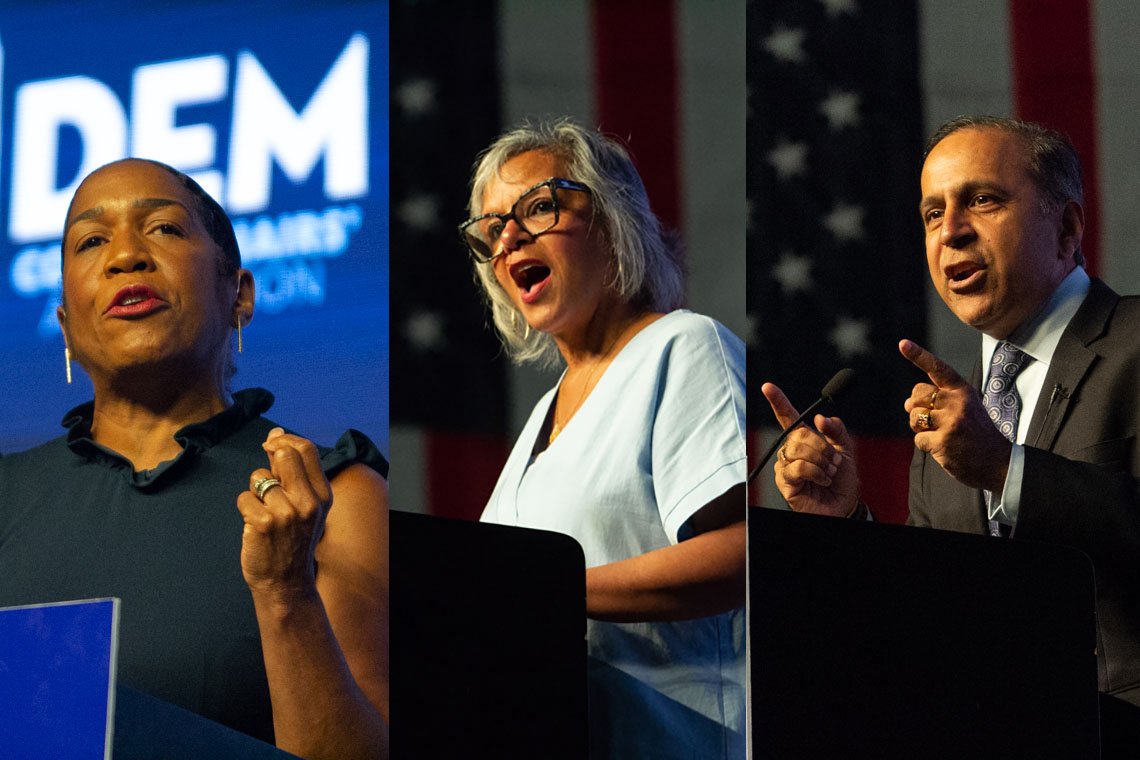
When Donald Trump reclaimed the White House in 2024, he tapped into deep frustration over rising prices and economic uncertainty — especially in politically pivotal states like Michigan. Voters worried about grocery bills, rent, gas, and health care costs gave Republicans an opening.
Now, Democrats are trying to reclaim that narrative.
As inflation concerns linger and public confidence in the president’s ability to lower living costs wavers, Michigan has become a proving ground. The August Senate primary will determine which Democrat carries the party’s economic message into November’s high-stakes midterm elections — where control of Congress hangs in the balance.
Three candidates are offering different answers to the same pressing question: How do you make life more affordable for working families?
The Stakes: A Must-Win Senate Seat
The retirement of longtime Democratic Sen. Gary Peters has created a fiercely competitive race. If Democrats fail to hold this seat, their path back to Senate control becomes dramatically harder.
On the Republican side, former congressman Mike Rogers is preparing for another Senate bid. In 2024, he narrowly lost to Elissa Slotkin by just 19,000 votes — a reminder of how razor-thin margins can be in Michigan.
Against that backdrop, the Democratic primary has become a testing ground for three distinct affordability strategies.
Haley Stevens: Betting on Manufacturing and Moderation


In Saginaw, wearing a welding helmet and protective gloves, Haley Stevens stepped into a union training workshop, watching apprentices perfect their craft amid flying sparks. The setting was intentional.
Her suburban Detroit district lies at the heart of Michigan’s auto industry — the backbone of the state’s economy. Stevens has built strong relationships with organized labor and argues that protecting manufacturing jobs is central to lowering costs for families.
She has sharply criticized Trump’s tariff policies, claiming they destabilize Michigan’s industrial base and increase consumer prices.
“He’s focused on international deals instead of local ones,” Stevens said, arguing that job insecurity and layoffs follow when trade strategies ignore domestic manufacturing.
During her visit, she asked apprentices detailed questions about plumbing designs and infrastructure upgrades. She emphasized that aging systems will require skilled workers — and promised federal investment to support both jobs and modernization.
Union leaders listening over the hum of machinery nodded as she discussed the rising complexity of health care benefits for workers. Stevens positions herself as a pragmatic voice — not too far left, not too far right — hoping that moderation resonates in a divided state.
Mallory McMorrow: Expanding What Works in Michigan
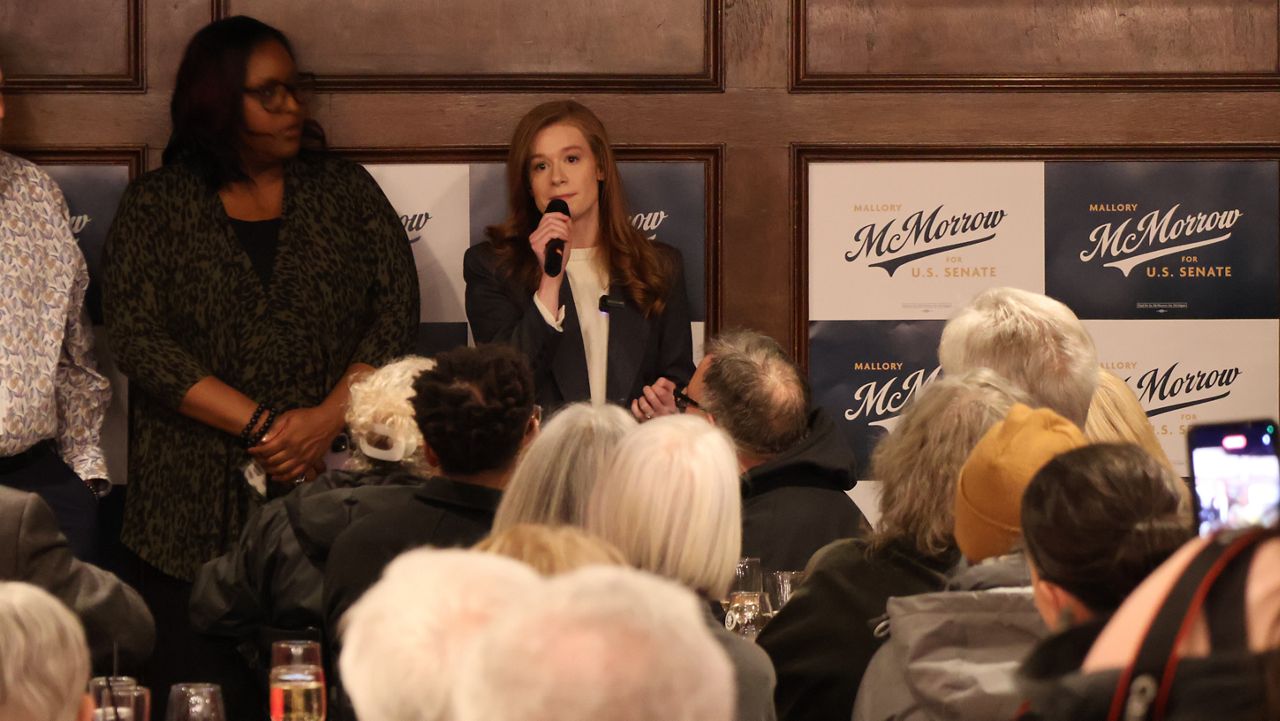


In a dimly lit room at Churchill’s Food & Spirits in downtown Flint, supporters squeezed into their seats as “Jesse’s Girl” played overhead. Mallory McMorrow’s campaign events often take place in breweries and neighborhood gathering spots — reflecting her effort to meet voters where they are.
McMorrow entered politics after Trump’s 2016 victory and rose quickly within the Michigan State Senate’s Democratic leadership. In recent years, she gained national attention — including at the 2024 Democratic convention, where she referenced the conservative “Project 2025” agenda to energize the base.
But on the campaign trail, her focus is local and practical.
She argues that Michigan has pioneered policies that could serve as national models. One example: expanding cash grants to new mothers under existing state programs.
“When something is working, you build on it,” McMorrow said. She believes Michigan’s policy successes can be scaled nationally to ease financial pressure on families.
When asked about the impact of tariffs on soybean farmers, she pledged to engage rural communities respectfully — avoiding what some voters perceive as urban condescension.
One supporter compared her to former Sen. Debbie Stabenow, praising her energy and agricultural awareness. McMorrow’s pitch blends progressive ambition with Michigan-first pragmatism.
Abdul El-Sayed: Taking Aim at Health Care Costs


At a freezing January town hall in Detroit, physician and former county health official Abdul El-Sayed delivered a blunt diagnosis: corporate greed is driving the cost-of-living crisis.
Around 100 supporters gathered at a community college to hear him outline a sweeping vision centered on health care reform. El-Sayed, who previously ran for governor in 2018 against Gretchen Whitmer, led the crowd in a familiar chant: “Money out of politics, money in your pocket, Medicare for all.”
Long a champion of universal health care, El-Sayed has refined his message to allow supplemental union or employer coverage. But his core argument remains unchanged: reducing medical expenses is key to easing financial strain for working Americans.
He frequently links declining union membership and widening inequality, arguing they are interconnected challenges fueled by corporate influence.
Supporters like Natasha VanGessel, a Royal Oak medical assistant, praise his policy depth and consistency. El-Sayed insists he has been sounding the alarm on affordability long before it became the political buzzword of the moment.
Three Paths, One Political Test
The Michigan Senate primary reflects a broader national debate within the Democratic Party.
Stevens emphasizes manufacturing strength and moderate coalition-building.
McMorrow promotes state-level policy expansion and community engagement.
El-Sayed pushes systemic reform, especially in health care.
Each strategy seeks to answer the same fundamental concern: how to make everyday life more affordable for Michigan families.
In a state that often decides national elections, the outcome could shape not only Michigan’s future — but also the Democratic Party’s direction heading into November.
The affordability message helped Trump regain power. Now, Michigan Democrats are betting that a sharper, more focused economic pitch can win it back.

