

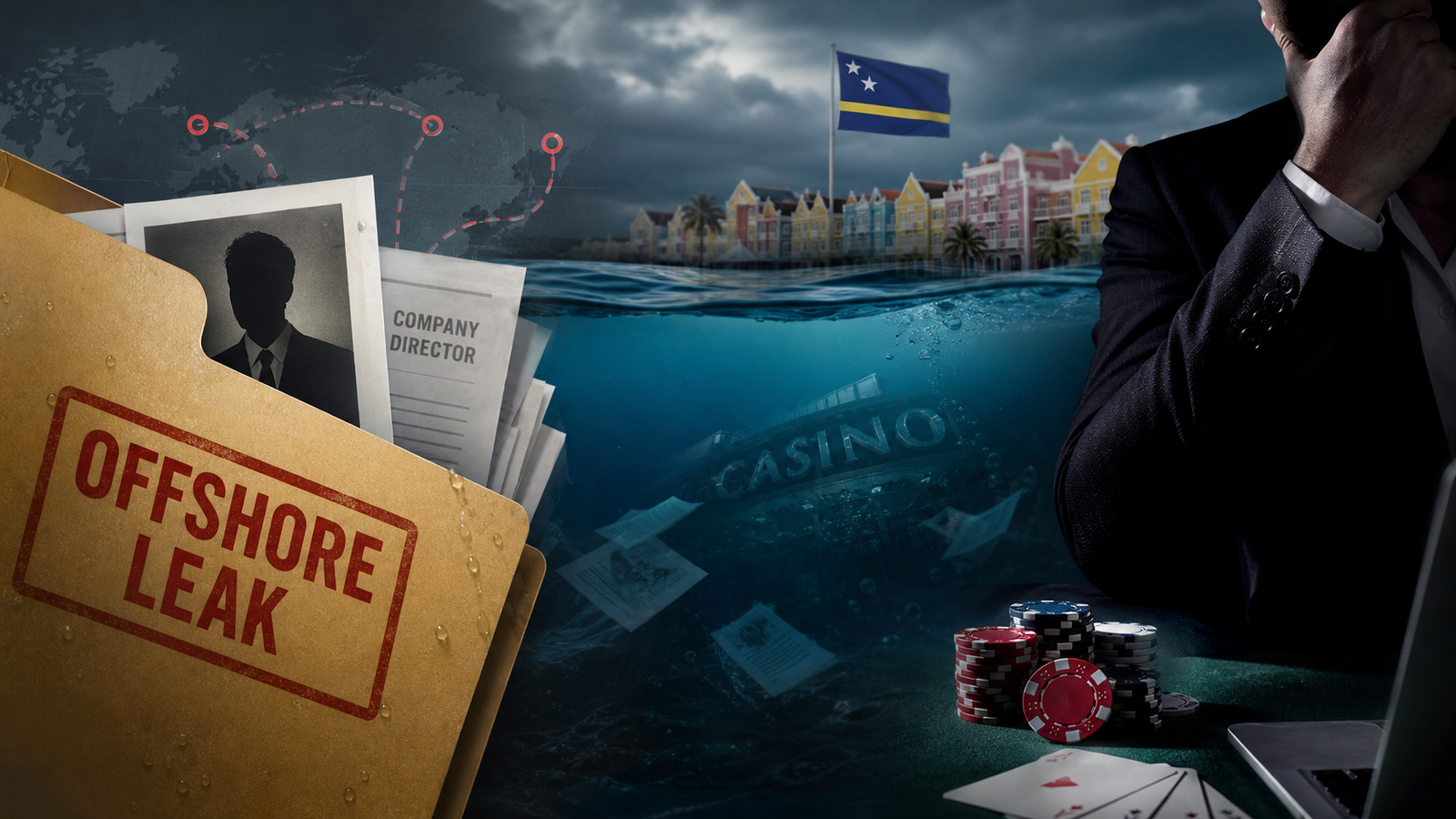
Massive Offshore Leak: Casino Secrets Exposes Hidden Owners Behind Curaçao Gambling Firms
The Massive Offshore Leak known as “Casino Secrets” has exposed previously confidential information about hundreds of gambling companies connected to Curaçao, offering an unprecedented look at ownership structures, licensing applications and regulatory assessments in the offshore online gambling industry.
The investigation, published by Dutch investigative journalism organisation Follow the Money (FTM) in cooperation with international media partners and cybersecurity researcher Lilith Wittmann, is based on tens of thousands of documents obtained from the internal systems of the Curaçao Gaming Authority (CGA).
What Is the Casino Secrets Leak?
The Casino Secrets investigation examined information extracted from the Curaçao Gaming Authority’s licensing systems after researchers gained unauthorised access to the regulator’s internal infrastructure.
According to the investigation, the material includes licence applications, ownership declarations, corporate structures, regulatory assessments and financial information. The broader archive contains more than 40,000 documents, while the investigation says more than 2 terabytes of data were analysed.
FTM reported that the leaked records helped journalists identify around 800 owners associated with nearly 650 licensed gambling companies operating thousands of gambling websites.
The publication of the material has brought renewed attention to the way offshore gambling businesses are structured and regulated.
Hidden Ownership Structures Come Under Scrutiny
One of the most significant findings concerns the difficulty of determining who ultimately controls some gambling companies.
FTM’s investigation manually reviewed corporate structures, personal disclosure forms and regulatory assessments. It said this process allowed it to verify 897 ultimate-beneficial-owner records involving 767 individuals.
The documents also reveal how some gambling businesses were structured through companies and trust offices, potentially making it difficult for regulators, journalists and authorities in other countries to identify the individuals ultimately controlling them.
The presence of an individual or company in the leaked records does not by itself establish illegal conduct. The Casino Secrets archive itself notes that inclusion in the database does not imply illegal or improper activity.
Curaçao Gaming Authority Faces Questions
The leak has placed the Curaçao Gaming Authority’s regulatory processes under renewed scrutiny.
FTM reported that some licence applications contained unresolved questions about ownership, sources of wealth or corporate structures, yet licences were nevertheless recommended or granted.
In one reported case involving 1xBet, investigators found that the regulator had questions about the company’s ownership structure and requested additional information. The investigation says the company subsequently received a licence despite those questions remaining unresolved.
The CGA has defended its regulatory procedures and argued that the industry has been undergoing a transition following Curaçao’s gambling-law reforms.
The regulator has also cautioned that individual documents should not necessarily be interpreted without their wider regulatory context.
Curaçao’s Role in Global Online Gambling
Curaçao has long been an important jurisdiction for online gambling companies.
The island has thousands of gambling domains connected to its licensing system. Historically, its regulatory model relied heavily on private master-license holders, which subsequently provided sublicences to operators.
Curaçao overhauled that system in 2024, moving toward direct government regulation through the Curaçao Gaming Authority.
However, the Casino Secrets investigation argues that questions surrounding ownership transparency and enforcement have continued even after the regulatory reforms.
Some Curaçao-licensed gambling sites have also faced regulatory action or blacklisting in foreign markets, including allegations concerning unauthorised gambling activity and compliance with anti-money-laundering requirements.
Major Gambling Platforms Appear in the Records
The leaked material has attracted particular attention because it includes records involving well-known gambling businesses and platforms.
Reports examining the database have discussed companies and operators connected with names including Stake, 1xBet and Blaze.
FTM reported that its analysis found previously undisclosed ownership information and regulatory concerns involving some of these businesses. The companies and individuals mentioned in the reporting have disputed or challenged some interpretations of the leaked documents.
It is important to distinguish between appearing in the leaked records and being accused of wrongdoing. The documents cover licensing and regulatory processes involving many companies, and the investigation itself says the presence of a company in the archive does not automatically indicate misconduct.
What About Gambling Operations in the US?
The leak is also relevant beyond Curaçao because offshore gambling companies can target customers across international markets.
FTM reported that authorities in the United States, Australia and European countries have blacklisted or taken action against Curaçao-registered online casinos over issues including unauthorised gambling and regulatory violations.
However, a Curaçao licence does not automatically give an operator permission to accept bets in another country’s jurisdiction.
Whether a particular gambling platform can legally operate in the US depends on the laws and licensing requirements applicable in the specific state or market. The existence of a Curaçao licence should therefore not be interpreted as blanket authorisation to operate throughout the United States.
Data Includes Sensitive Information
The scale and nature of the leaked material have also raised cybersecurity concerns.
According to FTM, the files included passports, tax returns and sensitive financial information alongside licensing and ownership records.
This makes the incident significant not only from a gambling-regulation perspective but also from a data-security standpoint.
The reported breach demonstrates how a compromise of a regulator’s internal systems can expose information belonging to businesses and individuals whose records are held for compliance purposes.
How the Breach Happened
Cybersecurity researcher Lilith Wittmann said she and collaborators maintained access to the Curaçao Gaming Authority’s systems for around nine months.
FTM reported that Wittmann gained access to the licensing portal in late 2025 using a false identity and subsequently obtained access to documents stored in the system.
The CGA has acknowledged that its licensing portal experienced unauthorised access and has said that the full scope and implications of the incident were being investigated.
The circumstances have raised questions about cybersecurity controls at regulatory bodies responsible for handling sensitive corporate and personal information.
Why the Offshore Leak Matters
The Massive Offshore Leak has broader implications for the international online gambling industry.
Ownership transparency is important because regulators need to know who controls gambling businesses, where their money comes from and whether operators comply with anti-money-laundering requirements.
The leaked records also highlight the challenge of regulating online businesses that can establish corporate structures in one jurisdiction while marketing or accepting customers elsewhere.
Financial experts cited by FTM warned that opaque ownership structures can create risks related to money laundering and criminal influence. These are expert assessments about the risks associated with the structures identified in the investigation, rather than findings that every company named in the leak engaged in such activity.
What Happens Next?
The Casino Secrets archive has made a large amount of historical regulatory material accessible for public scrutiny.
The release is likely to lead to additional reporting about individual gambling companies, ownership structures, licensing decisions and regulatory practices.
At the same time, companies named in the investigation may challenge particular interpretations of the documents, while the Curaçao Gaming Authority is expected to face further questions about its due-diligence procedures and cybersecurity safeguards.
For regulators in other countries, the disclosures could also renew attention on how offshore licences are assessed when gambling operators seek to serve customers internationally.
Frequently Asked Questions
1. What is the Casino Secrets leak?
Casino Secrets is an international investigative project based on confidential documents obtained from the Curaçao Gaming Authority’s internal systems. The material concerns gambling companies, licences, ownership structures and regulatory assessments.
2. How many documents were exposed?
The Casino Secrets project says its archive contains more than 40,000 documents and that more than 2 terabytes of data were analysed.
3. How many gambling companies are involved?
FTM said its investigation examined records associated with nearly 650 licensed gambling companies operating thousands of websites.
4. What information was included in the leak?
The material reportedly included licence applications, ownership records, corporate structures, regulatory assessments, passports, tax information and financial records.
5. Does appearing in the Casino Secrets database mean a company broke the law?
No. Inclusion in the database does not by itself establish illegal or improper conduct. The archive explicitly cautions against drawing that conclusion solely from inclusion in the records.
6. What is the Curaçao Gaming Authority?
The Curaçao Gaming Authority is the island’s gambling regulator and is responsible for licensing and overseeing online gambling operators under Curaçao’s current regulatory framework.
7. Are Curaçao-licensed casinos automatically legal in the US?
No. A Curaçao licence does not automatically authorise a gambling operator to serve customers in the United States. US gambling laws and licensing requirements vary by jurisdiction.
8. Which gambling companies have been mentioned in reporting about the leak?
Reporting has discussed records connected with gambling businesses including Stake, 1xBet and Blaze, among others. The presence of these companies in the investigation does not itself establish wrongdoing.
9. Why is ownership information important for gambling regulators?
Knowing a company’s ultimate beneficial owners helps regulators conduct due diligence, assess sources of funds and identify potential compliance, financial-crime and regulatory risks.
10. Will more information from the leak be published?
The Casino Secrets project has made a searchable archive available and has indicated that its investigation covers a large volume of regulatory material. Further reporting and analysis may therefore emerge as journalists and researchers examine the records.

