

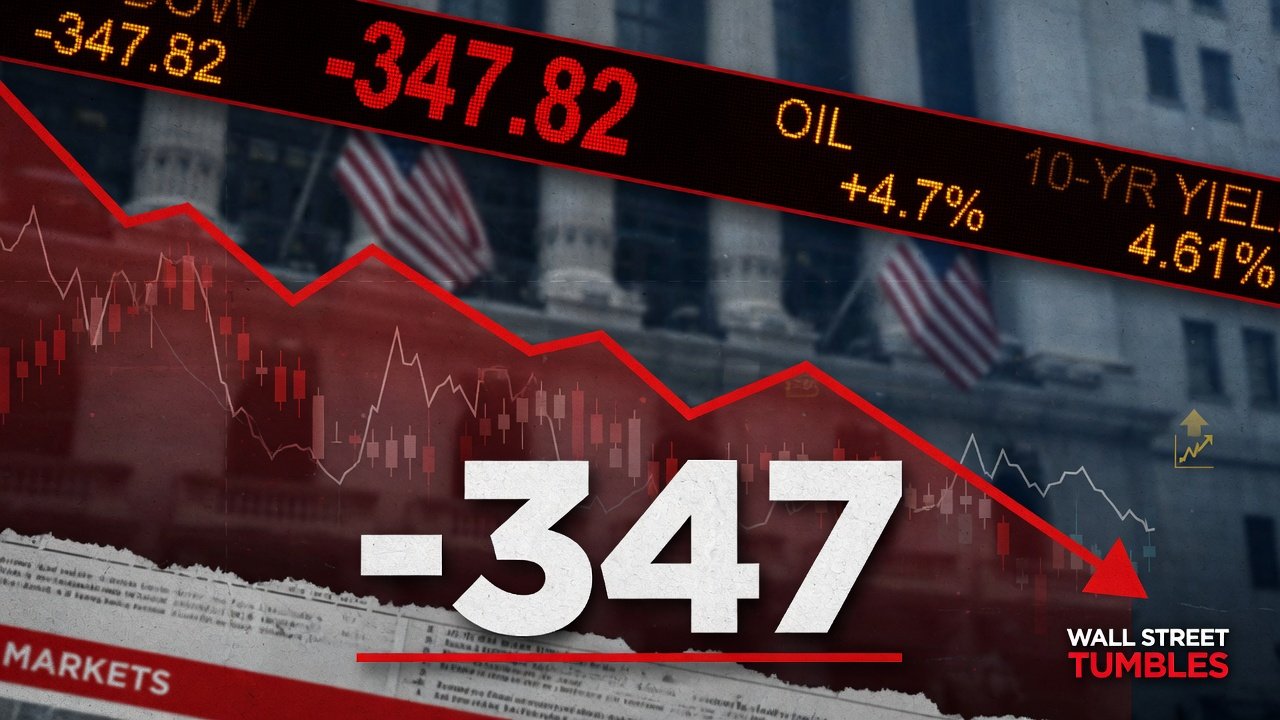
Wall Street Tumbles: Dow Falls Nearly 350 Points as Oil Prices and Treasury Yields Surge
Wall Street tumbles as U.S. stocks ended sharply lower on Monday, September 28, with rising crude oil prices and surging Treasury yields putting pressure on equities. The Dow Jones Industrial Average fell 347.11 points, or 0.67%, to 51,481.51, while the Nasdaq Composite declined 248.34 points, or 0.92%, to 26,820.38. The S&P 500 dropped 59.72 points, or about 0.8%, to 7,683.69.
The sell-off came as investors assessed renewed geopolitical uncertainty, higher energy costs and the potential implications for U.S. inflation and Federal Reserve interest-rate policy.
Dow Jones and Nasdaq End Lower
The Dow experienced its third consecutive daily decline, losing nearly 350 points during Monday’s session.
The technology-heavy Nasdaq Composite fell nearly 0.9%, while the S&P 500 also posted a significant decline. According to Reuters, the Nasdaq led the major U.S. indexes lower as higher oil prices and Treasury yields weighed on risk appetite.
The decline followed a strong previous week for U.S. equities, making Monday’s move a notable reversal as investors shifted their focus toward inflation, interest rates and geopolitical developments.
Crude Oil Prices Add to Market Pressure
A major factor behind the market decline was another increase in crude oil prices.
U.S. crude settled at $92.60 a barrel, while Brent crude settled at $105.28 a barrel on Monday. Oil prices had risen by more than $4 at one point during the session before giving back some gains.
Higher oil prices can raise transportation, manufacturing and other operating costs across the economy. They can also add to inflation pressures, potentially complicating the Federal Reserve’s decisions on interest rates.
The latest oil move was linked to uncertainty surrounding the conflict involving Iran and the security of the Strait of Hormuz, a key route for global energy shipments.
Treasury Yields Reach Multi-Year Highs
The bond market added another layer of pressure for stocks.
The 10-year U.S. Treasury yield climbed to around 5.23%, its highest level since 2007, according to the Associated Press. The 30-year Treasury yield also reached its highest level since the early 2000s.
Rising Treasury yields can make government bonds more attractive relative to equities. Higher yields can also increase borrowing costs for companies and put pressure on the valuations of growth and technology stocks.
Reuters reported that Treasury yields have risen alongside expectations that the Federal Reserve could raise interest rates further in the coming months.
Inflation Concerns Return to Focus
The combination of higher oil prices and Treasury yields has renewed investor concerns about inflation.
Energy costs are an important component of the broader inflation picture. A prolonged increase in crude prices could feed into fuel, transportation and production costs, potentially making it harder for inflation to move lower.
That matters for financial markets because investors are closely watching the Federal Reserve’s next policy decisions. Reuters reported that expectations for another rate increase had risen following the recent surge in oil prices and yields.
Geopolitical Uncertainty Weighs on Sentiment
Monday’s market decline also reflected uncertainty surrounding developments involving the United States and Iran.
Oil prices initially jumped after President Donald Trump rejected an Iranian proposal related to reopening the Strait of Hormuz. Later in the session, some of the increase was reversed amid expectations of further negotiations involving Qatari mediators.
The developments created uncertainty for investors because prolonged disruption around a major energy route could keep crude prices elevated.
The situation also demonstrates how geopolitical developments can quickly affect financial markets through energy prices, inflation expectations and interest-rate projections.
Technology Stocks Face Pressure
Technology and growth stocks were particularly sensitive to the increase in bond yields.
Higher long-term interest rates can affect the valuation of companies whose expected earnings are further in the future. This can be especially relevant for high-growth technology businesses.
Despite the broader technology-sector pressure, Nvidia shares rose about 1.7% after the company announced a record $150 billion expansion of its share-buyback authorization. The move helped the chipmaker outperform much of the broader market.
The performance highlighted the uneven nature of Monday’s session, with some individual companies gaining despite the wider market decline.
What Investors Are Watching Next
Markets are now turning their attention toward upcoming U.S. economic data and Federal Reserve communications.
Investors will be monitoring inflation and employment indicators for clues about the direction of monetary policy. Reuters noted that market participants were particularly focused on upcoming economic indicators ahead of the Fed’s October meeting.
The combination of elevated oil prices, high Treasury yields and geopolitical uncertainty could therefore remain an important theme for U.S. markets heading into the final quarter of 2026.
Wall Street Market Snapshot
| Index | September 28, 2026 Close | Daily Change |
|---|---|---|
| Dow Jones Industrial Average | 51,481.51 | -347.11 (-0.67%) |
| S&P 500 | 7,683.69 | -59.72 (-0.8%) |
| Nasdaq Composite | 26,820.38 | -248.34 (-0.92%) |
| Russell 2000 | 2,817.91 | -19.64 (-0.7%) |
The figures show that the selling was broad-based across major U.S. equity benchmarks.
Key Factors Behind Wall Street’s Decline
- Dow Jones: Fell 347.11 points, or 0.67%.
- Nasdaq Composite: Dropped 248.34 points, or 0.92%.
- S&P 500: Declined about 0.8%.
- Crude oil: Brent settled at $105.28 per barrel.
- U.S. crude: Settled at $92.60 per barrel.
- 10-year Treasury yield: Rose to around 5.23%, its highest level since 2007.
- Geopolitical risks: Uncertainty surrounding Iran and the Strait of Hormuz contributed to the oil-price surge.
- Federal Reserve: Expectations for additional rate increases added to market concerns.
Frequently Asked Questions
1. Why did Wall Street fall on September 28, 2026?
U.S. stocks fell amid higher crude oil prices, rising Treasury yields and geopolitical uncertainty. Investors were also concerned that higher energy prices could add to inflation and influence Federal Reserve interest-rate policy.
2. How much did the Dow Jones fall?
The Dow Jones Industrial Average fell 347.11 points, or 0.67%, to 51,481.51 on September 28, 2026.
3. How much did the Nasdaq fall?
The Nasdaq Composite dropped 248.34 points, or 0.92%, to 26,820.38.
4. What happened to the S&P 500?
The S&P 500 fell about 0.8%, closing at 7,683.69.
5. Why are rising oil prices negative for stocks?
Higher oil prices can increase fuel, transportation and production costs and may contribute to broader inflation. Persistent inflation can also affect expectations for interest rates.
6. What happened to Treasury yields?
The 10-year U.S. Treasury yield climbed to around 5.23%, its highest level since 2007, according to the Associated Press.
7. How do higher Treasury yields affect stocks?
Higher bond yields can make fixed-income investments more attractive compared with stocks while also increasing borrowing costs and putting pressure on equity valuations.
8. What was the price of Brent crude?
Brent crude settled at approximately $105.28 per barrel on September 28, while U.S. crude settled at $92.60.
9. Did all major technology stocks fall?
No. While the Nasdaq declined overall, Nvidia rose about 1.7% following its announcement of a $150 billion increase in its share-buyback authorization.
10. What will investors watch next?
Investors will be watching upcoming U.S. inflation and employment data, Federal Reserve comments and developments affecting oil supplies and geopolitical tensions.

